How did it begin?
This article is dedicated to everyone who is passionate about the art of light, colors, angles, shapes, and objects being captured to a photosensitive surface to portray the very moments of daily life. We at filmdelafilm love history, and how film industry evolved into a gigantic multiverse. That is why our first article is about the history of photography, the very first photography, the invention of color photography, and other curiosities. So, let's take a look at it together.
Let's start with the term "photography." Photography is the process of capturing light on a photosensitive surface, either film or an electronic sensor, usually by a camera.
The first photography was taken in 1826 or 1827 by Joseph Nicéphore Niépce. This gentleman was apparently French, born in 1765, in Chalon-sur-Saône, France. He grew up to be an inventor and experimenter, interested in lithography, optics, and chemical processes. In 1827, he had his first invention with a camera obscura, which is basically a dark box or room with a small hole (or lens) projecting an image of the outside world onto a surface inside.
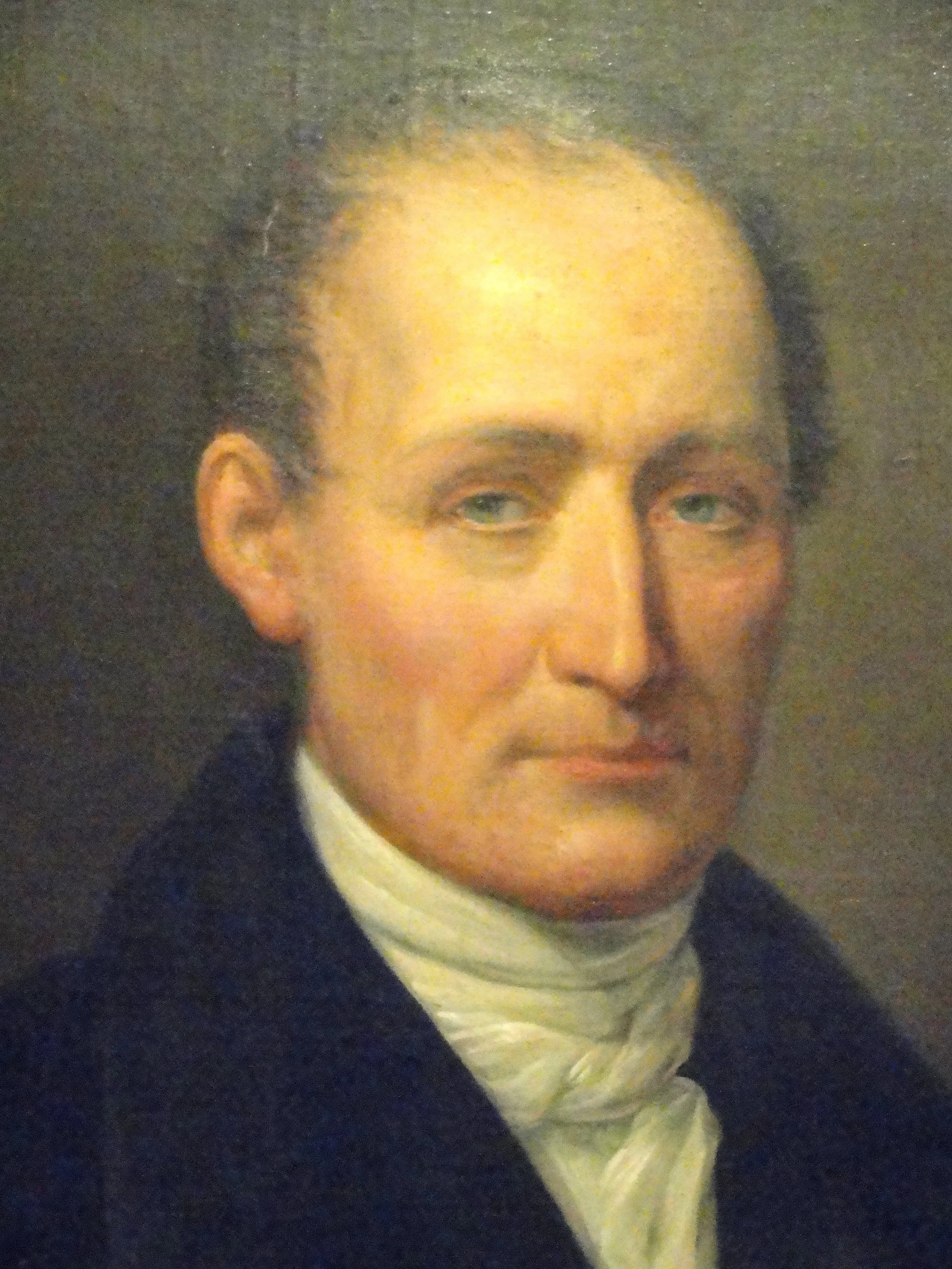
Wikipedia Image of Joseph Nicéphore Niépce
This first photography, taken 200 years ago, shows the view from the window.
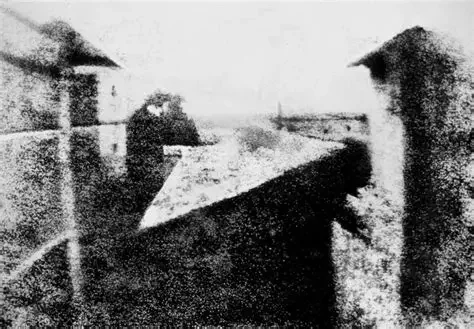
Wikipedia Image of the View from the window at Le Gras by Joseph Nicéphore Niépce
The first color photography was demonstrated in 1861 by Thomas Sutton. James Clerk Maxwell designed the whole experiment and proposed the three colour separation theory. In short, James Clerk Maxwell was a Scottish physicist who contributed to the foundations of modern electromagnetism and made important contributions to other areas of physics. Thomas Sutton was an English photographer, author, and inventor.
This first known case of color photography took place when James Clerk Maxwell applied three filters to take photos that displayed three primary colors (RGB). However, it was not until 1906 that the invention of the Kinemacolor system by George Albert Smith allowed people to see color films.
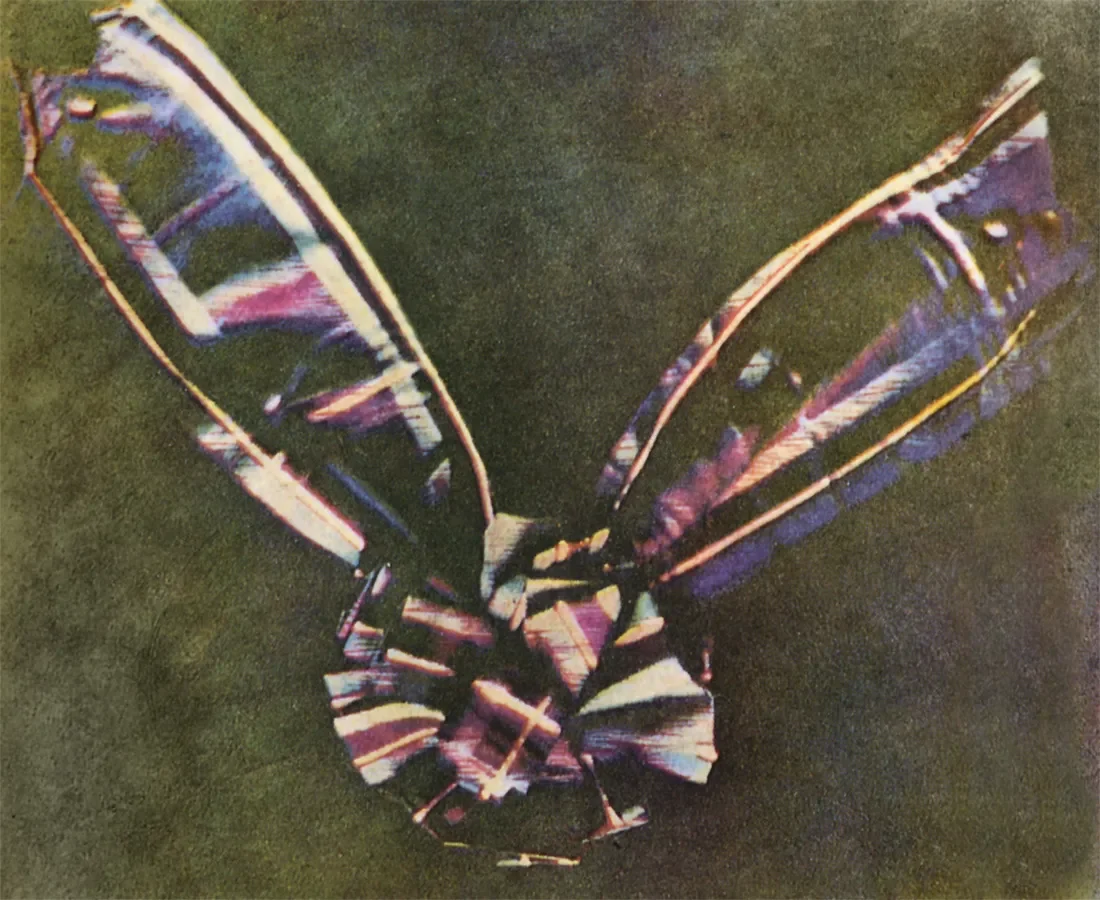
Wikipedia image of the first permanent colour photography - Thomas Sutton using the method proposed by James Maxwell
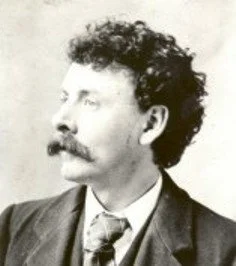
Wikipedia Image of George Albert Smith (filmmaker)
Alright, this was such basic information about the first, black and white photography and the emergence of color photography. Let's take a moment to look back to the 19th century, when the world was changing quite rapidly. The Industrial Revolution began, and many people moved to cities for work. The invention of photography in 1826–1827 made it possible to capture moments of life with images and share them with friends and family.
The first photography as we know it was taken by French inventor Louis Daguerre in 1837, but this photo was not published until 1839. When the first public presentation of the daguerreotype process was held at the Paris Academy of Sciences on August 19, 1839, it caused a sensation. Louis Daguerre was born on November 18, 1787, in Cormeilles-en-Parisis, France. From his youth, he was interested in drawing and painting, and he first studied art in his hometown. After graduation, he went to Paris, where he met a friend of ours, whom we already know, with Joseph Nicéphore Niépce, who believed that it would be possible to create images by capturing them on camera. You see, you just have to believe in yourself :) ... So, in 1837, he developed a method of photography that is now known as the daguerreotype. Basically, it was a method where the image was recorded on a plate coated with silver iodide. The exposure lasted 15 to 20 minutes. However, by 1838, Luis Daguerre had reduced exposure times to 4–5 minutes for outdoor scenes.
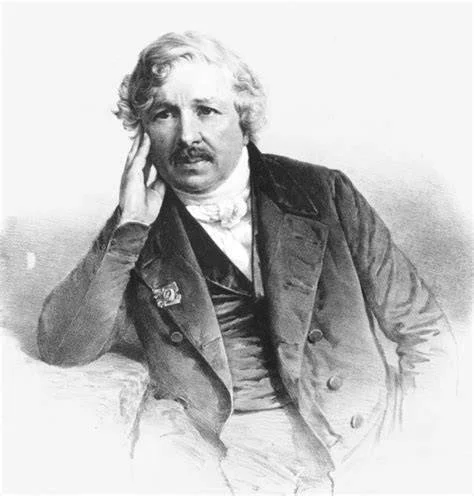
Wikipedia Image of Louis Daguerre
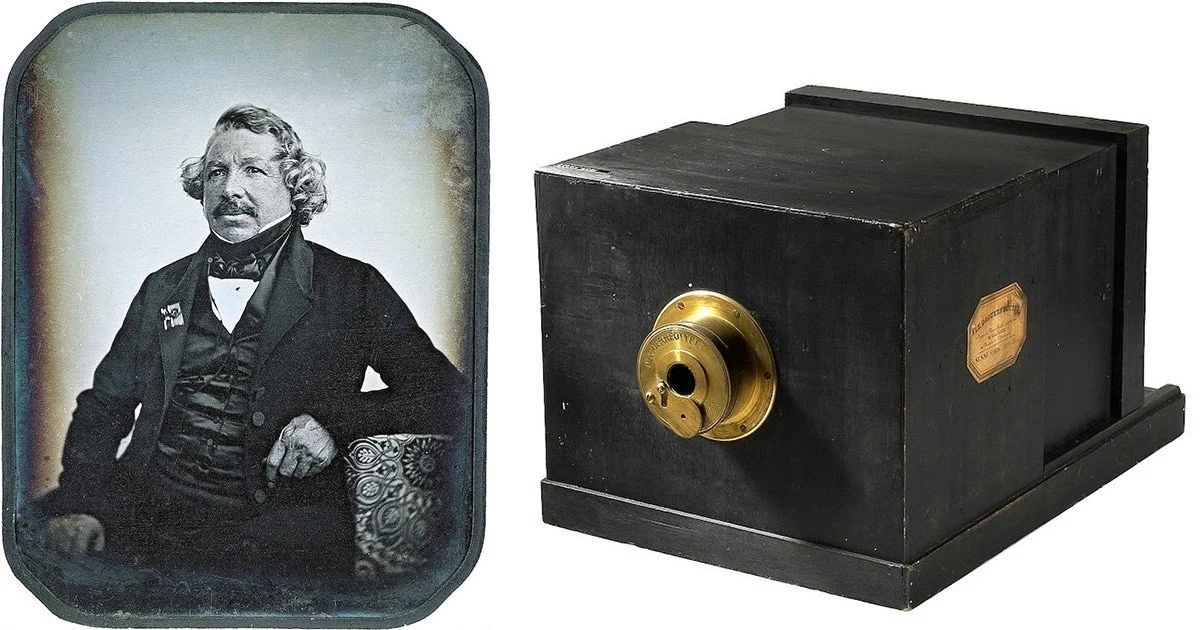
Wikipedia Image of Daguerrotype
If you have read this far, congratulations, we are nearing the end, but let us teleport to the 20th century before that.
The 20th century was a time of profound change and innovation. Many modern technologies have been invented that have changed the way we live and work. Photography is one of the technologies that has a significant impact on our society.
Thus, photography, as we know, became possible in 1826, when Joseph Nicéphore Niépce captured the first permanent image using his camera obscura. It would take another 10–12 years for Louis Daguerre to invent daguerreotype, which was a more practical and widespread form of photography at the time. The invention of photography led to an increase in the number of people using cameras as they became more accessible. This has changed the way in how we see and document our world. The digital revolution has been going on for some time and has changed the way we take pictures and the way we share them. Now we can take a photo and upload it to social media in seconds. In 1990, Kodak launched the first commercially available digital camera, which was called the DCS-100. In 1995, Sony released its first digital camera, which was called the Mavica.
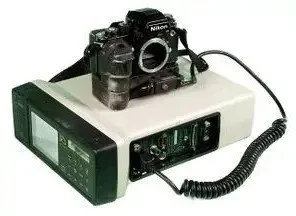
Wikipedia image of 1990 Kodak DCS-100 developed in collaboration with Nikon
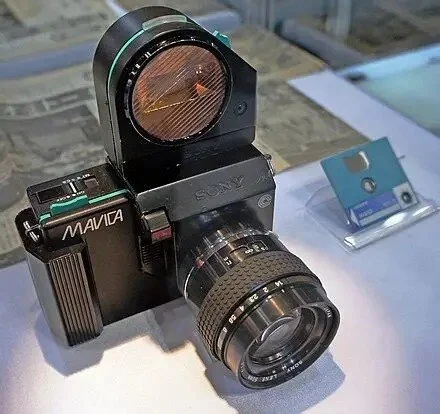
Wikipedia Image of Sony Mavica
The history of photography is remarkably interesting. When we consider that in the beginning, photography was used only as a scientific tool to document the world around us. However, later it became a way for us to express ourselves and our emotions through pictures.
Just as the world has changed over time, so have the ways we communicate with each other. Photography has been part of this change and has helped shape the way we understand what is happening in the world around us.
Do you have a favorite photographer? Are you studying his or her work? Please share with us!
Till next time!